Can you fly your drone in the Philippines?
Whether you can fly depends on your drone, your registration and exactly where you fly. Here is what applies: key rules, no-fly zones and the official sources, in one place.
Regulator
Civil Aviation Authority of the Philippines (CAAP)
Framework
CAAP PCAR Part 11 (RPAS) + Memorandum Circulars
Pilot credential
RPA Controller Certificate
KEY RULES
- Maximum altitude is 400 ft (122 m) above ground level.
- You must maintain direct, unaided visual contact with the drone at all times (glasses or contact lenses are fine). Flying by FPV goggles is only allowed with a visual observer maintaining VLOS; flying beyond visual line of sight requires CAAP authorisation (PCAR Part 11).
- Registration required for ALL commercial drone use (any weight); non-commercial drones registered only at 7 kg and above per CAAP PCAR Part 11
- Stay at least 10 km from any airport — this buffer was expanded via CAAP Memorandum Circular 026-2025 after drone sightings near NAIA (Manila) in late 2024/early 2025, and is strictly enforced.
- Keep at least 30 m distance from uninvolved persons.
- Night flying requires a special CAAP permit and proper lighting on the drone — not permitted by default.
- RPA Controller Certificate required for commercial use or drones over 7 kg (valid 5 years)
- Commercial operations require a UAS Operator Certificate (valid 3 years) plus a Remote Pilot License for the pilot, required for commercial use or for drones 7 kg or heavier even when flown recreationally.
- Liability insurance is required as part of the UAS Operator Certificate process for commercial operations.
- Always give way to manned aircraft.
No-fly zones and restrictions
Frequently asked questions
Do I need a licence or certificate to fly a drone in the Philippines?
In the Philippines, the credential to know about is RPA Controller Certificate. Whether you need it depends on your drone's weight and how you fly — Civil Aviation Authority of the Philippines (CAAP) runs the scheme, and the official sources below spell out exactly when it applies.
Can I fly a drone as a tourist or foreign visitor in the Philippines?
Yes — recreational drones under 7 kg need no registration, licence or insurance in the Philippines, and this applies equally to visiting tourists. Keep 10 km from airports, below 400 ft, daylight and line-of-sight only; flying over populated areas or at night needs a CAAP Special Flight Permit. Drones of 7 kg or more, or any commercial use, require full CAAP registration and certificates. Rules for foreign pilots can change, so always double-check with Civil Aviation Authority of the Philippines (CAAP) before you travel, and see the official sources below.
What are the most important drone rules in the Philippines?
The short version: Maximum altitude is 400 ft (122 m) above ground level. On top of that: You must maintain direct, unaided visual contact with the drone at all times (glasses or contact lenses are fine). Flying by FPV goggles is only allowed with a visual observer maintaining VLOS; flying beyond visual line of sight requires CAAP authorisation (PCAR Part 11). Also: Registration required for ALL commercial drone use (any weight); non-commercial drones registered only at 7 kg and above per CAAP PCAR Part 11. These are central aviation rules — location-specific airspace, land, nature, privacy and photography requirements can also apply in the Philippines, so always check the official sources.
Where am I not allowed to fly a drone in the Philippines?
What you need to avoid are the restricted zones — typically around airports, prisons, military areas and protected nature. You'll find the official map for the Philippines under Sources below, and the DroneKoll app shows current NOTAMs (temporary airspace restrictions) for the Philippines.
Who regulates drone flying in the Philippines?
Drone flying in the Philippines is regulated by Civil Aviation Authority of the Philippines (CAAP), which handles both the rules and the airspace. Their official pages are linked under Sources below — that is where changes appear first.
Good to know
OFFICIAL SOURCES
ADDITIONAL RESOURCES
Always check official CAAP sources before flying. This app is a tool — not a legal authority. Rules may change without notice.
The app
The whole picture, up to date — in your pocket
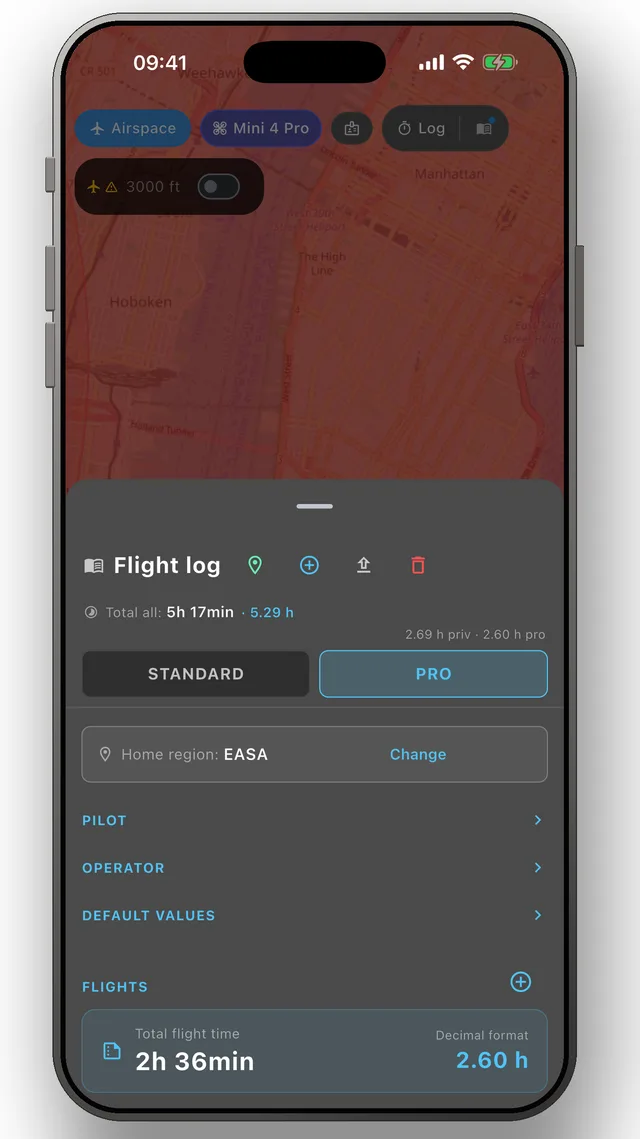
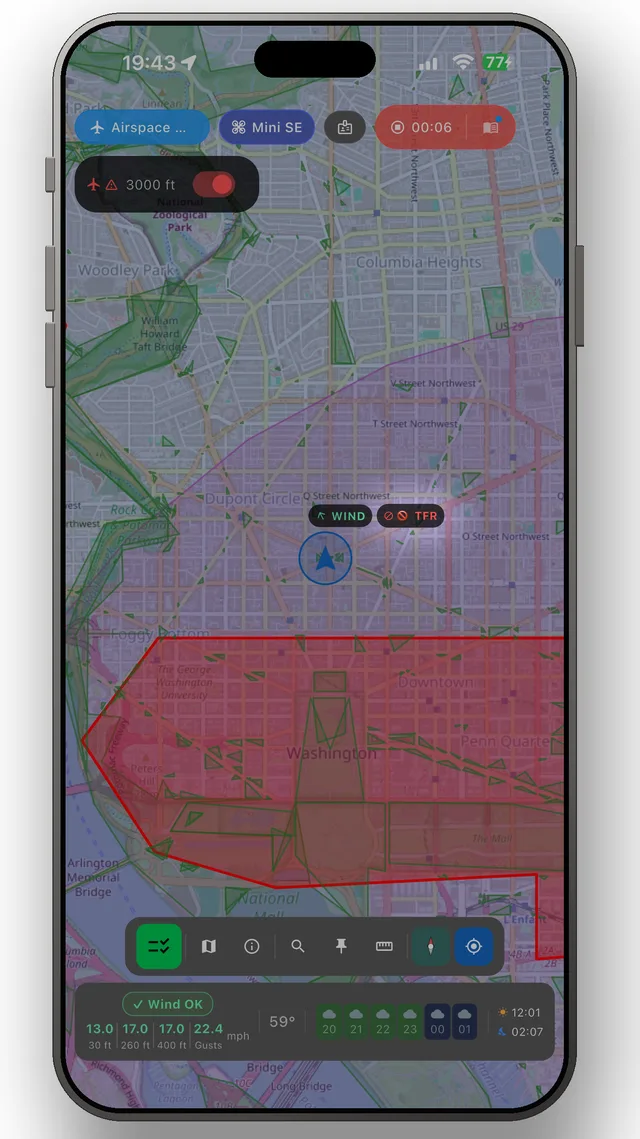
DroneKoll shows weather and current NOTAMs on the map — with flight log and checklists built in.
More in the app: Interactive zone map · Flight log · Planning & measuring · Pre-flight checklists · Flying abroad