Can you fly your drone in South Africa?
Whether you can fly depends on your drone, your registration and exactly where you fly. Here is what applies: key rules, no-fly zones and the official sources, in one place.
Regulator
South African Civil Aviation Authority (SACAA)
Framework
South African Civil Aviation Regulations Part 101
Pilot credential
Remote Pilot Certificate
KEY RULES
- Visual line of sight (VLOS) mandatory — max 500 m horizontal distance
- Max 150 ft (45 m) above ground — and stay below the highest obstacle within 300 m (restricted VLOS)
- 50 m minimum distance from people, public roads and buildings (unless the owner permits) — never fly directly over anyone
- Stay at least 10 km from any aerodrome — airports, airfields and helipads (including private lodge airstrips). Strictly enforced in South Africa.
- No flying in controlled, restricted or prohibited airspace, or near/over prisons, police stations, crime scenes, courts, nuclear plants or national key points
- Flying below 2,500 ft above the highest point of any national park (including Kruger), special nature reserve or World Heritage Site requires prior written permission from that area's own management authority (Protected Areas Act s47) — not only in SANParks parks. Separately, breaking civil aviation rules can bring a fine and/or up to 10 years' imprisonment.
- Daylight only — clear weather conditions required
- No registration or licence needed for private, non-commercial flying with drones under 7 kg (restricted VLOS only)
- Private flights only over property you own or have the owner's permission to fly over
- Any non-private use (commercial, corporate or non-profit) requires a Remote Pilot Certificate (RPC, formerly RPL), a UAS Operating Certificate (UASOC, formerly ROC), an RPAS Letter of Approval (RLA) and SACAA registration (C of R); commercial use also needs an Air Service Licence (ASL)
- Insurance is generally required for commercial operations only — verify current SACAA requirements before commercial use.
- Do not fly over gatherings of people or public events
No-fly zones and restrictions

Frequently asked questions
Do I need a licence or certificate to fly a drone in South Africa?
In South Africa, the credential to know about is the Remote Pilot Certificate. Whether you need it depends on your drone's weight and how you fly — South African Civil Aviation Authority (SACAA) runs the scheme, and the official sources below spell out exactly when it applies.
Can I fly a drone as a tourist or foreign visitor in South Africa?
Yes — private recreational flying needs no registration or licence in South Africa, for visitors too, with drones under 7 kg. Limits are strict: keep the drone within 500 m of you, about 45 m high, 50 m from people and roads, 10 km from any aerodrome — and flying over a national park, Kruger included, needs prior written permission from its management authority. Rules for foreign pilots can change, so always double-check with South African Civil Aviation Authority (SACAA) before you travel, and see the official sources below.
What are the most important drone rules in South Africa?
The short version: Visual line of sight (VLOS) mandatory — max 500 m horizontal distance. On top of that: Max 150 ft (45 m) above ground — and stay below the highest obstacle within 300 m (restricted VLOS). Also: 50 m minimum distance from people, public roads and buildings (unless the owner permits) — never fly directly over anyone. These are central aviation rules — location-specific airspace, land, nature, privacy and photography requirements can also apply in South Africa, so always check the official sources.
Where am I not allowed to fly a drone in South Africa?
What you need to avoid are the restricted zones — typically around airports, prisons, military areas and protected nature areas. Check which restrictions apply in the official sources under Sources below. The DroneKoll app keeps the country's rules, weather and checklists in one place before you fly.
Who regulates drone flying in South Africa?
Drone flying in South Africa is regulated by South African Civil Aviation Authority (SACAA). The airspace itself is managed by ATNS. You will find both organisations' official pages under Sources below — those are the links worth bookmarking.
Good to know
OFFICIAL SOURCES
ADDITIONAL RESOURCES
Always check official SACAA sources before flying. This page is a guide — not a legal authority. Rules may change without notice.
The app
The whole picture, up to date — in your pocket
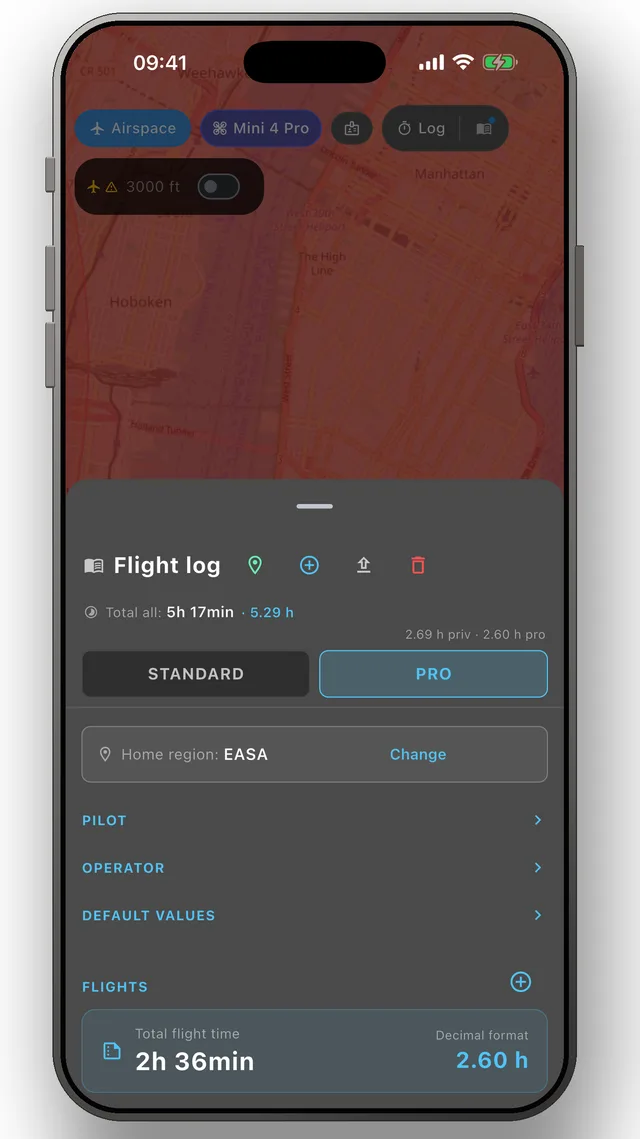
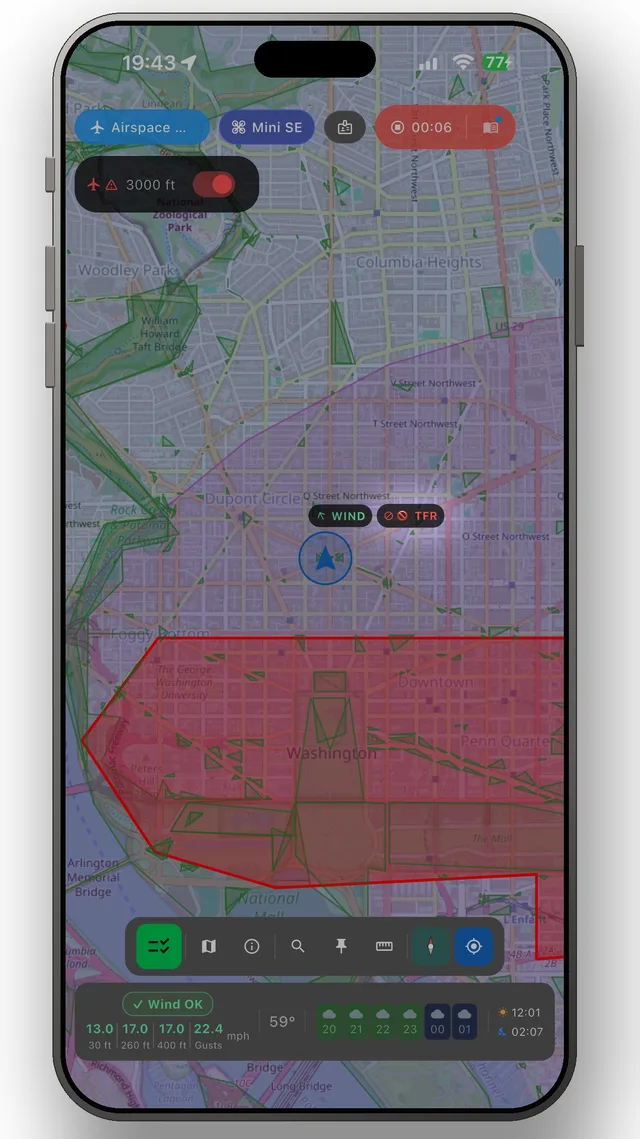
DroneKoll shows weather and current NOTAMs on the map — with a flight log and checklists built in.
More in the app:Interactive zone map · Flight log · Planning & measuring · Pre-flight checklists · Flying abroad