Can you fly your drone in Brazil?
Whether you can fly depends on your drone, your registration and exactly where you fly. Here is what applies: key rules, no-fly zones and the official sources, in one place.
Regulator
ANAC
Framework
RBAC-E nº 94 (ANAC) + ICA 100-40 (DECEA) — transitioning to RBAC No. 100
Pilot credential
Remote Pilot Certificate
MAIN RULES
- Maximum height: 120 m (400 ft) above ground level
- Drones weighing more than 250g: mandatory registration with SISANT (ANAC)
- Drones weighing up to 250g: exempt from registration, automatically licensed
- Minimum distance of 5.4 km from airports for low-altitude flights
- Minimum distance of 9 km from airports for flights up to 120 m
- Always keep the drone within direct line of sight (VLOS)
- A minimum distance of 30 meters from people not involved in the operation
- SARPAS (DECEA) authorization is required before each flight in controlled airspace
- Transmission equipment must be certified by ANATEL
- Night flights require specific authorization and anti-collision lighting
No-fly zones and restrictions
Frequently asked questions
Do I need a licence or certificate to fly a drone in Brazil?
In Brazil, the credential to know about is Remote Pilot Certificate. Whether you need it depends on your drone's weight and how you fly — ANAC runs the scheme, and the official sources below spell out exactly when it applies.
Can I fly a drone as a tourist or foreign visitor in Brazil?
Yes — visitors may fly recreationally, but Brazil tightened its rules in mid-2026: RBAC 100 replaced the old regulation in June, and since 1 July 2026 virtually every flight, even with a sub-250 g drone, needs a free SARPAS airspace authorization from DECEA. Drones over 250 g must also be registered in SISANT, which accepts foreign passports. Insurance is only required for non-recreational use. Rules for foreign pilots can change, so always double-check with ANAC before you travel, and see the official sources below.
What are the most important drone rules in Brazil?
The short version: Maximum height: 120 m (400 ft) above ground level. On top of that: Drones weighing more than 250g: mandatory registration with SISANT (ANAC). Also: Drones weighing up to 250g: exempt from registration, automatically licensed. These are central aviation rules — location-specific airspace, land, nature, privacy and photography requirements can also apply in Brazil, so always check the official sources.
Where am I not allowed to fly a drone in Brazil?
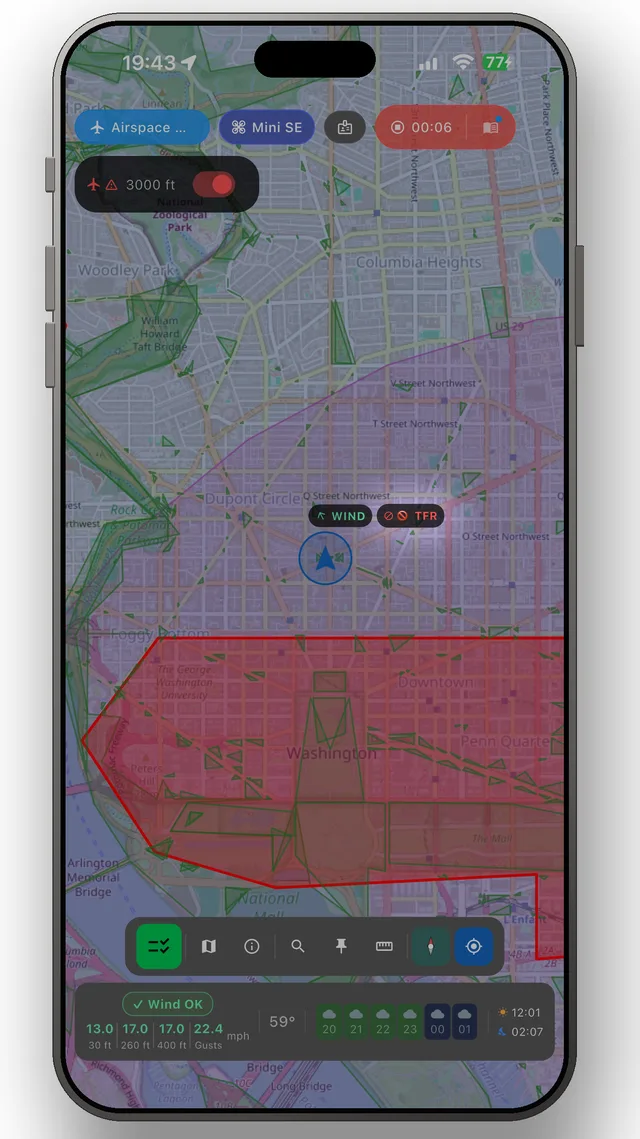
What you need to avoid are the restricted zones — typically around airports, prisons, military areas and protected nature. You'll find the official map for Brazil under Sources below, and the DroneKoll app shows current NOTAMs (temporary airspace restrictions) for Brazil.
Who regulates drone flying in Brazil?
Drone flying in Brazil is regulated by ANAC. The airspace itself is managed by DECEA. You will find both organisations' official pages under Sources below — those are the links worth bookmarking.
Good to know
OFFICIAL SOURCES
- ANAC — Drones (Rules and Registration) Official website of the National Civil Aviation Agency, featuring all the rules, categories, and requirements for drones gov.br
- SISANT — Drone Registration (ANAC) Mandatory registration system for drones weighing more than 250g. Register as PR (recreational) or PP (professional) sistemas.anac.gov.br
- SARPAS — Flight Authorization (DECEA) DECEA system for requesting flight authorization in controlled airspace. Required before every flight servicos.decea.mil.br
- ANATEL — Equipment Certification Check whether your drone's transmitter is certified by ANATEL for use in Brazil gov.br
ADDITIONAL RESOURCES
- AISWEB — NOTAMs and aeronautical charts (DECEA) Active NOTAMs and official DECEA aeronautical charts to check for temporary restrictions aisweb.decea.mil.br
- ANAC — Frequently Asked Questions About Drones ANAC's Official Responses to Common Questions from Drone Operators gov.br
- RBAC-E No. 94 — Complete Technical Standard Special Brazilian Civil Aviation Regulation No. 94 — full text applicable to drones gov.br
Always consult the official sources from ANAC and DECEA before flying. This app is a tool, not a legal authority. Brazil enforces RBAC-E No. 94 (currently transitioning to RBAC No. 100), which requires mandatory approval through SARPAS.
The app
The whole picture, up to date — in your pocket
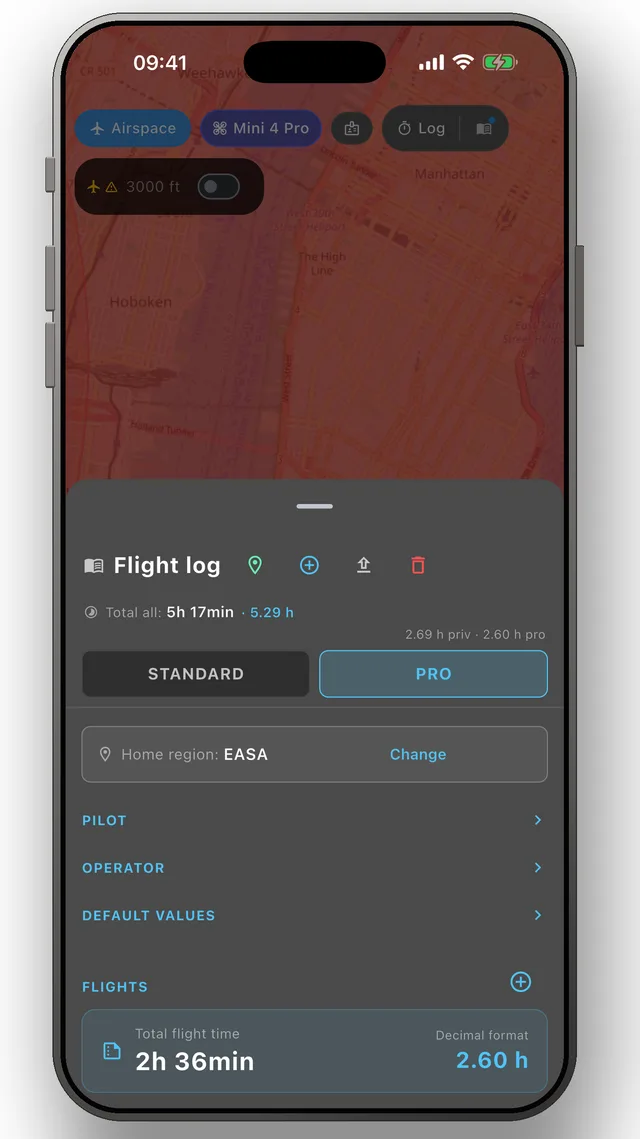
DroneKoll shows weather and current NOTAMs on the map — with flight log and checklists built in.
More in the app: Interactive zone map · Flight log · Planning & measuring · Pre-flight checklists · Flying abroad