Can you fly your drone in Slovakia?
Whether you can fly depends on your drone, your registration and exactly where you fly. Here is what applies: key rules, no-fly zones and the official sources, in one place.
Regulator
Dopravný úrad
Framework
EU 2019/947 (EASA Open Category) + national enforcement framework
Pilot credential
Drone Pilot License
Mapped zones
100
KEY RULES (EASA OPEN CATEGORY)
- In the open category, the maximum height is 120 m, measured as the distance to the closest point of the Earth's surface — not simply straight down, so near a slope the ground beside you may also count. Within 50 m of a tall artificial obstacle (over 105 m), the maximum height may be increased up to 15 m above the height of the obstacle at the request of the entity responsible for the obstacle.
- You must register as a drone operator if your drone weighs 250 g or more (or could transfer more than 80 J of kinetic energy on impact) — this also applies to toys. Below 250 g, registration is still mandatory if the drone has a sensor capable of capturing personal data, unless it is considered a toy under the EU Toy Safety Directive. Pilot training/certificate requirements are separate and depend on the drone's class and subcategory.
- A minimum age of 16 is required to fly independently in the open category — the A1/A3 training and exam (40 questions, online) are valid for 5 years and recognized throughout the EU. Younger pilots may fly only under the direct supervision of a certified remote pilot.
- Minimum distances by subcategory: A1 — do not fly over uninvolved persons; A2 — at least 30 m from uninvolved persons (5 m with an active low-speed mode function ≤ 3 m/s) and always at least the flight height (1:1 rule); A3 — at least 150 m from residential, commercial, industrial, and recreational areas.
- In the open category, you must keep the drone in direct visual line of sight with the naked eye (glasses/contact lenses are fine; binoculars or a screen do not count) — or bring in an observer to help, with clear and effective communication between you at all times, so that together you can monitor the airspace and avoid collisions. "Follow-me" mode is a separate exception, permitted up to 50 m from the pilot.
- Do not fly over assemblies of people. Rules for uninvolved persons depend on subcategory, class mark and operating conditions; check the official matrix.
- At M. R. Štefánik Airport in Bratislava, civil drone flights are prohibited within a 3 km radius of the aerodrome reference point (48°10'12''N, 17°12'46''E), from the ground surface up to 500 m above ground level — zone RUAS098M under Minister's Decision No. 104/2026, effective from 18 August 2026, which cancelled the previous zone PUAS0103M. The prohibition does not apply to life-saving flights, ambulance flights, and search and rescue (SAR) flights, nor to flights carried out with the prior approval of the Ministry of Defense of the Slovak Republic by drones equipped with a remote identification system. Within a 5 km radius (zone RUAS001-LZIBAD-D), civil UAS operations are permitted only in the specific category.
- As of 31 March 2026, new rules apply in the controlled zones (CTR) Štefánik (Bratislava), Košice, Žilina, Piešťany, and Tatry (Poprad) under Decision No. 1/2026 of Dopravný úrad (the Slovak Transport Authority): flying without authorization is possible only at a distance of more than 5 km from the airport and up to a maximum height of 30 m, or within atypical airspace (at a distance of more than 5 km from the airport, up to the height of a building and only in its immediate vicinity, at most up to a horizontal distance of 30 m from the building). Operations in a CTR within the meaning of the designated geographic areas may be carried out only on the basis of an operational authorization in the specific category.
- Pre-flight preparation includes verifying that the drone's remote identification system is active and up to date (NSAT).
- Night flights are permitted—the drone must have a green flashing light turned on.
- National parks (Tatra Mountains, Slovak Paradise, Low Tatras): restrictions are in effect.
- The Malacky-Kuchyňa (RUAS077M), Sliač (RUAS080M), and Prešov (RUAS081M) military airfields, each with a radius of 5,600 m: flights only with the prior approval of the Ministry of Defense of the Slovak Republic and with an active remote identification system (Minister's Decision No. 104/2026).
- Before each flight, check the UAS geographic areas (PUAS/RUAS zones)—the list is maintained by the Ministry of Transportation and Dopravný úrad, and the zones are subject to change.
Frequently asked questions
Do I need a licence or certificate to fly a drone in Slovakia?
Two separate things are easily confused here. Registration as a drone operator is required as soon as your drone weighs 250 g or more, or has a camera or sensor able to capture personal data — so it covers many sub-250 g drones too, unless they qualify for the toy exemption. The remote pilot's certificate of competency (Drone Pilot License) is something else: you need it once your drone weighs 250 g or more, or carries a C1 or higher class mark. A camera drone under 250 g therefore needs registration, but no exam. You get the certificate by passing an online theory test with Dopravný úrad, and it is then valid across the whole EASA area, not just here.
Can I fly a drone as a tourist or foreign visitor in Slovakia?
Yes — EU drone rules apply to visitors too. If you are already registered as a drone operator in another EASA country, that registration and your A1/A3 certificate (also A2) are valid in Slovakia as well. Coming from outside the EASA area, you register once — in the first EASA country where you plan to fly, here with Dopravný úrad. Slovakia requires third-party liability insurance for open-category flights in subcategories A2 and A3, which includes legacy drones over 250 g, and the Defence Ministry states that aerial photography from a drone still requires its prior written consent.
What are the most important drone rules in Slovakia?
The short version: In the open category, the maximum height is 120 m, measured as the distance to the closest point of the Earth's surface — not simply straight down, so near a slope the ground beside you may also count. Within 50 m of a tall artificial obstacle (over 105 m), the maximum height may be increased up to 15 m above the height of the obstacle at the request of the entity responsible for the obstacle. On top of that: You must register as a drone operator if your drone weighs 250 g or more (or could transfer more than 80 J of kinetic energy on impact) — this also applies to toys. Below 250 g, registration is still mandatory if the drone has a sensor capable of capturing personal data, unless it is considered a toy under the EU Toy Safety Directive. Pilot training/certificate requirements are separate and depend on the drone's class and subcategory. Also: A minimum age of 16 is required to fly independently in the open category — the A1/A3 training and exam (40 questions, online) are valid for 5 years and recognized throughout the EU. Younger pilots may fly only under the direct supervision of a certified remote pilot. These are central aviation rules — location-specific airspace, land, nature, privacy and photography requirements can also apply in Slovakia, so always check the official sources.
Where am I not allowed to fly a drone in Slovakia?
The no-go areas are the restricted zones — typically around airports, prisons, military sites and protected nature areas. In Slovakia you can see every zone on the interactive map on this page, and in the DroneKoll app wherever you are standing.
Who regulates drone flying in Slovakia?
Drone flying in Slovakia is regulated by Dopravný úrad. The airspace itself is managed by LPS SR. You will find both organisations' official pages under Sources below — those are the links worth bookmarking.
Good to know
OFFICIAL SOURCES
- UAS Geographic Areas — Transport AuthorityOfficial Transport Authority page with UAS geographic areas (KML for download). Pre-flight preparation: familiarize yourself with the currently valid geographic areas.letectvo.nsat.sk
- Transport Authority — Drone RegulationsOfficial Rules and Resources from the Transportation Authority for Dronesletectvo.nsat.sk
- Transport Authority — Operator RegistrationRegistration as a UAS Operator (valid in all EU/EASA countries)letectvo.nsat.sk
- LPS — Airspace MapMap of Airspace and Drone Zones of the Slovak Air Traffic Servicesgis.lps.sk
- Transport Authority — Overview of RulesOverview of the Rules for Flying Drones in Slovakialetectvo.nsat.sk
ADDITIONAL RESOURCES
Before flying, always check the official sources of Dopravný úrad and the LPS airspace map. This page is a guide — not a legal authority. Slovakia follows EASA regulations with national supplements.
The app
The whole picture, up to date — in your pocket
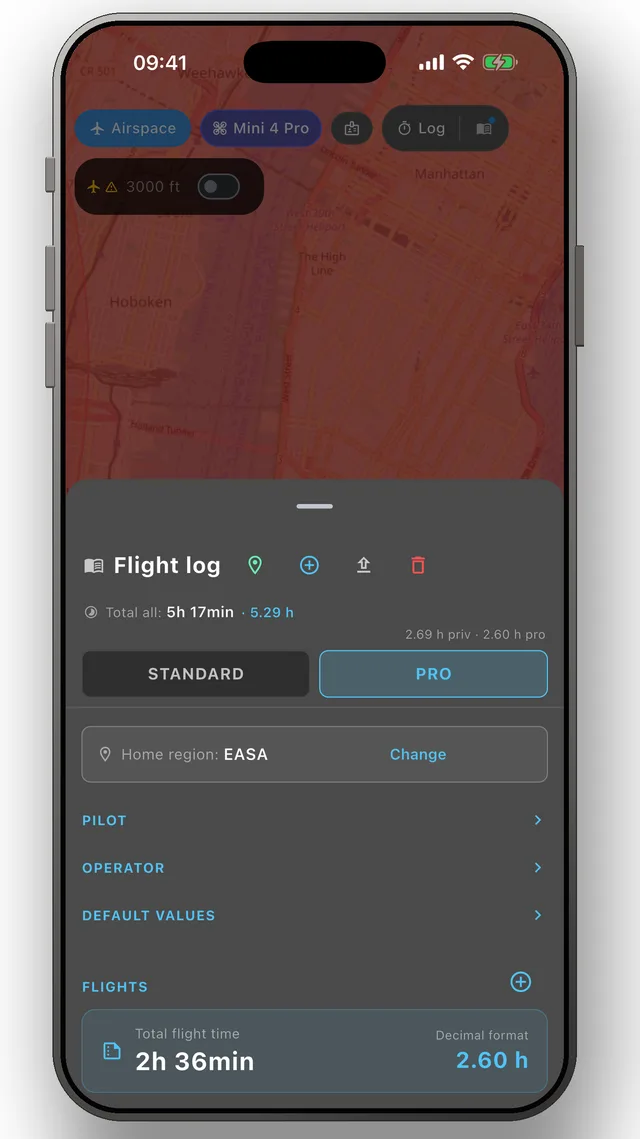
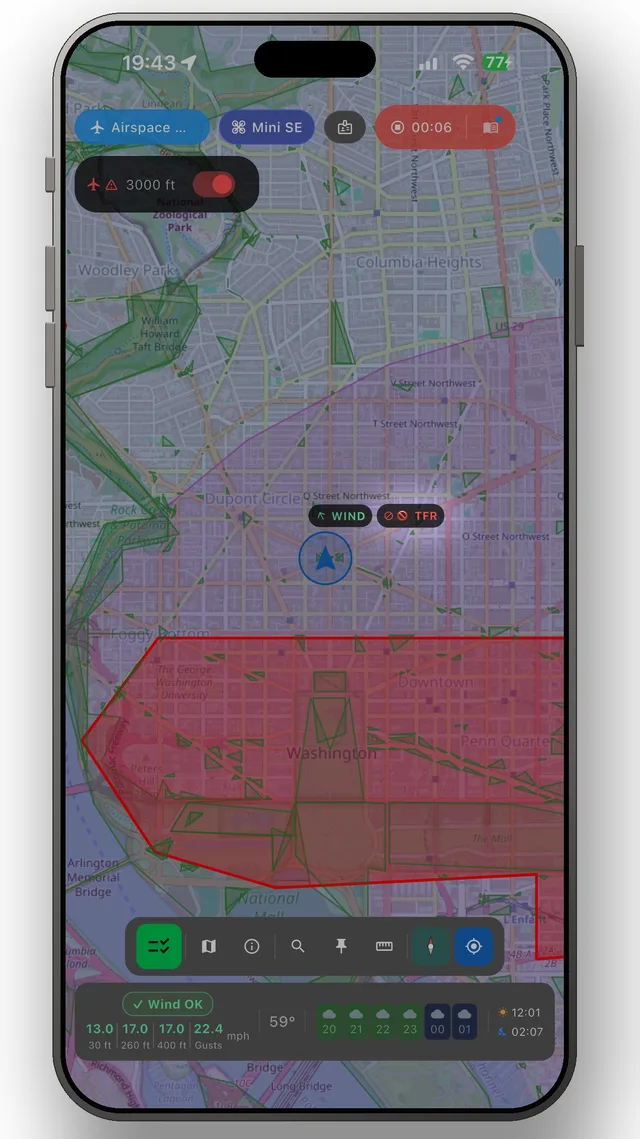
DroneKoll shows no-fly zones, weather and NOTAMs on one interactive map — with a flight log and checklists built in.
More in the app:Interactive zone map · Flight log · Planning & measuring · Pre-flight checklists · Flying abroad