Can you fly your drone in the United Kingdom?
Whether you can fly depends on your drone, your registration and exactly where you fly. Here is what applies: key rules, no-fly zones and the official sources, in one place.
Regulator
UK Civil Aviation Authority (CAA)
Framework
UK Air Navigation Order 2016 (as amended) + UK CAA drone regulations 2026
Pilot credential
Flyer ID & Operator ID
KEY RULES
- Max 120 m (400 ft) above ground level
- Flyer ID required from 100g — pass CAA online test (40 questions, 75% pass mark)
- Keep the drone within your own direct, unaided line of sight at all times, close enough to tell which way it's facing and to watch for other aircraft. There's no fixed legal maximum distance in metres — how far you can fly depends on visibility, lighting and the drone itself, not a set radius.
- Minimum 50 m from uninvolved people (30 m / 5 m apply only to UK class-marked drones with A2 certificate)
- Flight Restriction Zones (FRZs) surround airports, but their exact shape and size vary by airport — there is no universal '5 km circle'. Always check the specific FRZ using the CAA's official drone safety map before flying near an airport.
- Third-party liability insurance (per EC Regulation 785/2004) is mandatory for commercial/non-recreational flights, or for any drone 20 kg or heavier — optional but advised for lighter recreational use.
- Remote ID phasing in: from January 2026 for UK class-marked drones (UK1/UK2/UK3/UK5/UK6); fully mandatory January 2028
- UK is NOT part of EASA — EU pilot certificates are not valid in the UK
- London has three permanent restricted areas — R157 (Hyde Park/royal residences), R158 (City of London/Square Mile, a small ~0.5 NM zone around the financial district), and R159 (Canary Wharf/Isle of Dogs) — all drones banned regardless of size unless approved via a Non-Standard Flight application to NATS, submitted at least 28 days in advance. Parliament and Downing Street are in Westminster, outside all three R-zones, and are protected by separate mechanisms.
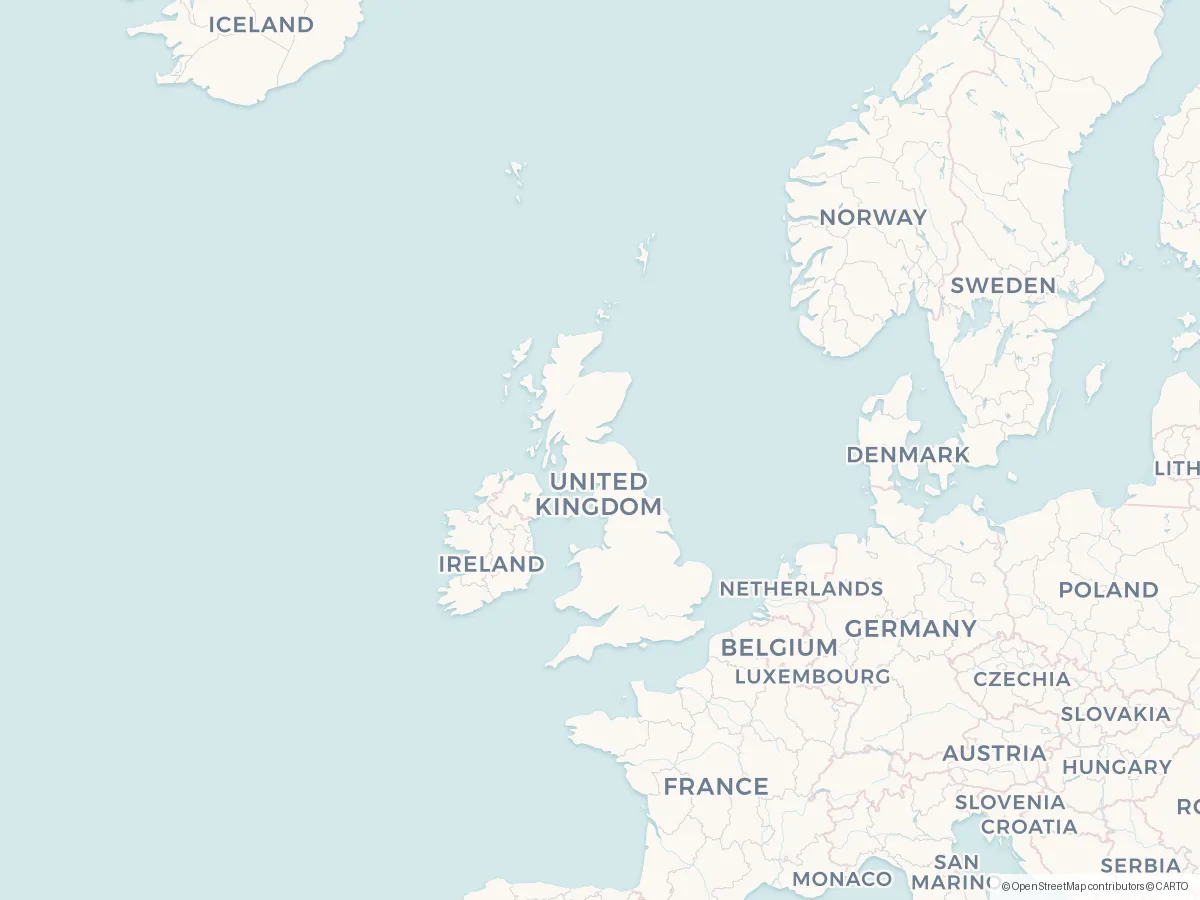
No-fly zones and restrictions
Frequently asked questions
Do I need a licence or certificate to fly a drone in the United Kingdom?
In the United Kingdom, you need a Flyer ID (from a free online test) to fly most drones, and an Operator ID (registration) for any drone from 250 g or fitted with a camera. Both are issued by the UK CAA. Full requirements and official sources below.
Can I fly a drone as a tourist or foreign visitor in the United Kingdom?
Yes — but visitors must register with the UK CAA first: overseas or EASA registrations and certificates are not recognised. A camera drone of 100 g or more, including a DJI Mini, needs the free online Flyer ID test plus an Operator ID (12.34 pounds a year, age 18+) labelled on the drone. Insurance is optional for recreational drones under 20 kg. Rules for foreign pilots can change, so always double-check with UK Civil Aviation Authority (CAA) before you travel, and see the official sources below.
What are the most important drone rules in the United Kingdom?
The short version: Max 120 m (400 ft) above ground level. On top of that: Flyer ID required from 100g — pass CAA online test (40 questions, 75% pass mark). Also: Keep the drone within your own direct, unaided line of sight at all times, close enough to tell which way it's facing and to watch for other aircraft. There's no fixed legal maximum distance in metres — how far you can fly depends on visibility, lighting and the drone itself, not a set radius. These are central aviation rules — location-specific airspace, land, nature, privacy and photography requirements can also apply in the United Kingdom, so always check the official sources.
Where am I not allowed to fly a drone in the United Kingdom?
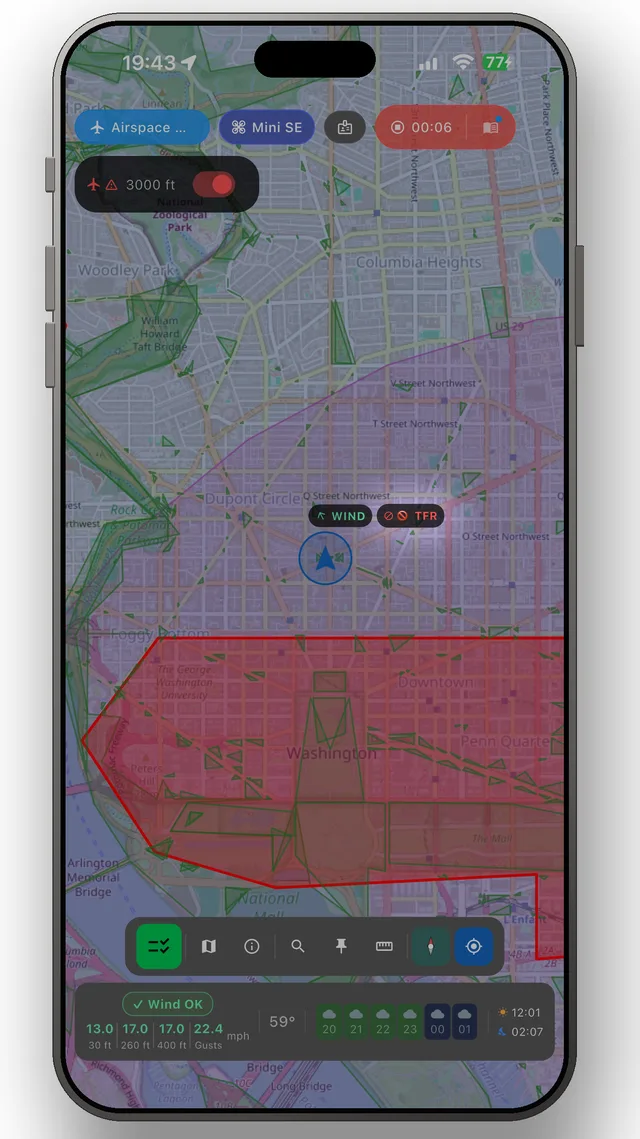
What you need to avoid are the restricted zones — typically around airports, prisons, military areas and protected nature. You'll find the official map for the United Kingdom under Sources below, and the DroneKoll app shows current NOTAMs (temporary airspace restrictions) for the United Kingdom.
Who regulates drone flying in the United Kingdom?
Drone flying in the United Kingdom is regulated by UK Civil Aviation Authority (CAA). The airspace itself is managed by NATS. You will find both organisations' official pages under Sources below — those are the links worth bookmarking.
Good to know
OFFICIAL SOURCES
- UK CAA — Drone regulations Official CAA hub for all UK drone rules, registration and resources caa.co.uk
- CAA — Register (Flyer ID & Operator ID) Get your Flyer ID (mandatory from 100g) and Operator ID (mandatory from 250g) register-drones.caa.co.uk
- CAA — The Drone Code Official rules: where you can fly, altitude limits and safety requirements register-drones.caa.co.uk
- Drone Assist — Airspace map Free flight planning app showing no-fly zones and airspace restrictions play.google.com
ADDITIONAL RESOURCES
Always check official CAA sources before flying. This app is a tool — not a legal authority. The UK has its own drone regulations separate from the EU/EASA. Local council bylaws may add further restrictions.
The app
The whole picture, up to date — in your pocket
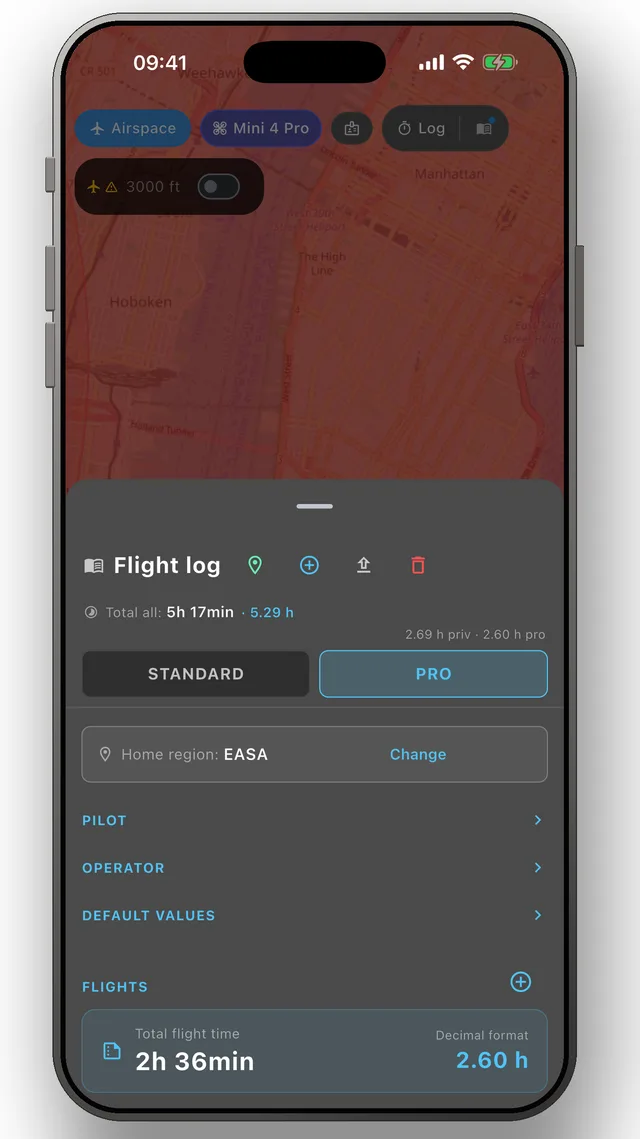
DroneKoll shows weather and current NOTAMs on the map — with flight log and checklists built in.
More in the app: Interactive zone map · Flight log · Planning & measuring · Pre-flight checklists · Flying abroad