Can you fly your drone in Austria?
Whether you can fly depends on your drone, your registration and exactly where you fly. Here is what applies: key rules, no-fly zones and the official sources, in one place.
Regulator
Austro Control
Framework
EU 2019/947 (EASA Open Category) + national enforcement framework
Pilot credential
Drone License
Mapped zones
241
KEY RULES (EASA OPEN CATEGORY)
- In the open category, the maximum height is 120 m, measured as the distance to the closest point on the Earth's surface — not simply straight down, so near a slope the ground beside you can also count. Within 50 m of a tall man-made obstacle (over 105 m), the maximum height may be increased up to 15 m above the height of the obstacle at the request of the entity responsible for the obstacle.
- You must register as a drone operator if your drone weighs 250 g or more (or could transfer more than 80 J of kinetic energy on impact) — this also applies to toys. Below 250 g, registration is still required if the drone has a sensor capable of capturing personal data, unless it counts as a toy under the EU Toy Safety Directive. Pilot training/certificate requirements are regulated separately and depend on the drone's class and subcategory.
- The A1/A3 proof of competency (free online course with a 40-question test) has a minimum age of 16; you can only register as an operator on your own from age 18. Younger pilots may only fly under the direct supervision of a certified remote pilot. The drone license (A1/A3 proof of competency) is valid for 5 years and must then be renewed — the first certificates issued in Austria from 2021 expire in 2026.
- Mandatory liability insurance — at least 750,000 SDR in coverage
- Vienna is within the restricted area LO R 15. Drones under 250 g may fly up to 30 m in height without a permit — but only if there is no aerodrome without an aerodrome zone within your flight area: in Vienna, these are ten heliports with a radius of about 1,500 m, where an operating permit from Austro Control GmbH for "restricted areas" is required during operating hours. From 250 g, a paid Austro Control permit is always required.
- In the open category, you must keep the drone within your own line of sight, with the naked eye (glasses/contact lenses are fine; binoculars or a screen do not count) — or fly with the support of an observer, with clear and effective communication between you at all times so that you can jointly scan the airspace and avoid collisions. Follow-me mode is a separate exception, permitted up to 50 m from the pilot.
- Do not fly over assemblies of people. Rules for uninvolved persons depend on subcategory, class mark and operating conditions; check the official matrix.
- Observe the UAS geographical zones (§18b LVR) on the Dronespace map. Operating unmanned aircraft (UAS) within a certain radius of aerodromes without their own aerodrome zone is generally only permitted outside operating hours. Before the flight, drone operators must find out the aerodrome's current operating hours — either via aviation publications (e.g. AIP, NOTAM) or directly from the aerodrome operator or aerodrome management. During the aerodrome's operating hours, drone operations are only permitted under the following conditions: for recognized rescue and emergency organizations, health services or civil protection authorities, provided the operation falls within their statutory remit; with an operational authorization for the "specific" category under EU Regulation 2019/947, if the risk assessment covers operations near aerodromes; with an LUC (light UAS operator certificate) under EU Regulation 2019/947, if it permits operations in the vicinity of aerodromes; or with an authorization under Article 16 of EU Regulation 2019/947, provided all conditions and requirements are met.
- UAS with a take-off mass under 250 g flown no higher than 30 m above ground are exempt from the consent requirement in control zones and from the permit requirement in restricted areas. In restricted areas, however, the exemption only applies if there is no aerodrome without an aerodrome zone within your flight area.
- Night flights in the open category are permitted with a flashing green light (EASA since 2022) — check specific zones on Dronespace.at
- National parks and nature reserves: additional restrictions apply
Frequently asked questions
Do I need a licence or certificate to fly a drone in Austria?
Two separate things are easily confused here. Registration as a drone operator is required as soon as your drone weighs 250 g or more, or has a camera or sensor able to capture personal data — so it covers many sub-250 g drones too, unless they qualify for the toy exemption. The remote pilot's certificate of competency (Drone License) is something else: you need it once your drone weighs 250 g or more, or carries a C1 or higher class mark. A camera drone under 250 g therefore needs registration, but no exam. You get the certificate by passing an online theory test with Austro Control, and it is then valid across the whole EASA area, not just here.
Can I fly a drone as a tourist or foreign visitor in Austria?
Yes — EU drone rules apply to visitors too. If you are already registered as a drone operator in another EASA country, that registration and your A1/A3 certificate (also A2) are valid in Austria as well. Coming from outside the EASA area, you register once — in the first EASA country where you plan to fly, here with Austro Control. Austria additionally requires drone liability insurance with at least 750,000 SDR of cover. Make sure your home policy, or a travel drone policy, explicitly covers flights in Austria before you go.
What are the most important drone rules in Austria?
The short version: In the open category, the maximum height is 120 m, measured as the distance to the closest point on the Earth's surface — not simply straight down, so near a slope the ground beside you can also count. Within 50 m of a tall man-made obstacle (over 105 m), the maximum height may be increased up to 15 m above the height of the obstacle at the request of the entity responsible for the obstacle. On top of that: You must register as a drone operator if your drone weighs 250 g or more (or could transfer more than 80 J of kinetic energy on impact) — this also applies to toys. Below 250 g, registration is still required if the drone has a sensor capable of capturing personal data, unless it counts as a toy under the EU Toy Safety Directive. Pilot training/certificate requirements are regulated separately and depend on the drone's class and subcategory. Also: The A1/A3 proof of competency (free online course with a 40-question test) has a minimum age of 16; you can only register as an operator on your own from age 18. Younger pilots may only fly under the direct supervision of a certified remote pilot. The drone license (A1/A3 proof of competency) is valid for 5 years and must then be renewed — the first certificates issued in Austria from 2021 expire in 2026. These are central aviation rules — location-specific airspace, land, nature, privacy and photography requirements can also apply in Austria, so always check the official sources.
Where am I not allowed to fly a drone in Austria?
The no-go areas are the restricted zones — typically around airports, prisons, military sites and protected nature areas. In Austria you can see every zone on the interactive map on this page, and in the DroneKoll app wherever you are standing.
Who regulates drone flying in Austria?
Drone flying in Austria is regulated by Austro Control, which handles both the rules and the airspace. Their official pages are linked under Sources below — that is where changes appear first.
Good to know
OFFICIAL SOURCES
- Austro Control — Drone RegulationsOfficial drone regulations and resources from Austrian Air Traffic Controldronespace.at
- Austro Control — Register as an operatorRegister as a UAS operator (€46.80, valid for 3 years, valid in all EU/EASA countries)dronespace.at
- Dronespace.at — Airspace MapOfficial interactive map showing drone zones and airspace restrictionsmap.dronespace.at
- Austro Control — Training and ExamsInformation on A1/A3 and A2 Training Courses and Examsdronespace.at
ADDITIONAL RESOURCES
Always check the official sources from Austro Control and Dronespace.at before every flight. This page is a guide — not a legal authority. Austria follows EASA regulations with national additions.
The app
The whole picture, up to date — in your pocket
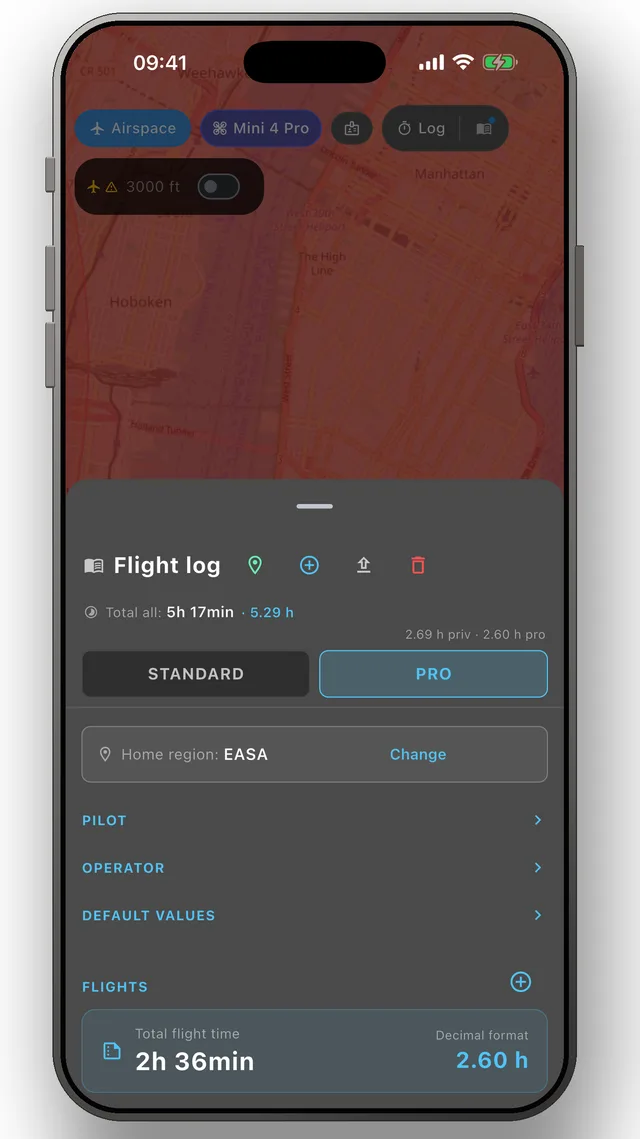
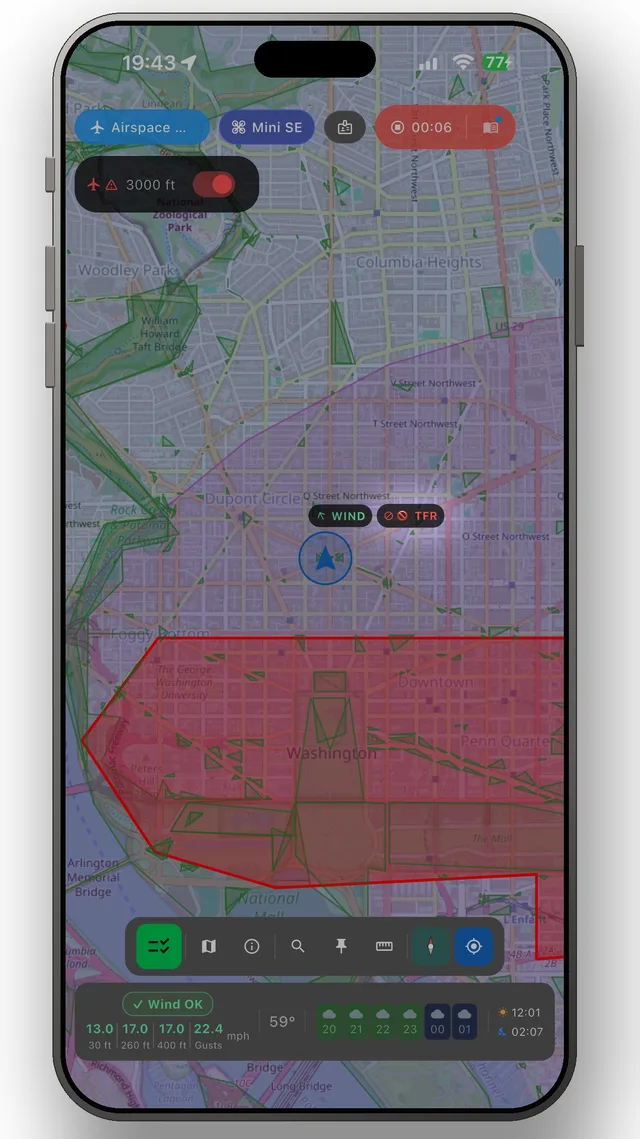
DroneKoll shows no-fly zones, weather and NOTAMs on one interactive map — with a flight log and checklists built in.
More in the app:Interactive zone map · Flight log · Planning & measuring · Pre-flight checklists · Flying abroad