Can you fly your drone in Slovenia?
Whether you can fly depends on your drone, your registration and exactly where you fly. Here is what applies: key rules, no-fly zones and the official sources, in one place.
Regulator
Javna agencija za civilno letalstvo (CAA)
Framework
EU 2019/947 (EASA Open Category) + Uredba o izvajanju izvedbene uredbe Komisije (EU) o pravilih in postopkih za upravljanje brezpilotnih zrakoplovov (Uradni list RS, št. 39/24)
Pilot credential
Drone Pilot Certificate
Mapped zones
70
KEY RULES (EASA OPEN CATEGORY)
- In the open category, the maximum height is 120 m, measured as the distance to the closest point of the Earth's surface — not simply straight down, so near a slope the ground beside you can also count. Within 50 m of a tall artificial obstacle (over 105 m), the maximum height may be increased up to 15 m above the height of the obstacle at the request of the entity responsible for the obstacle.
- As a drone operator, you must register if your drone weighs 250 g or more (or could transfer more than 80 J of energy on impact) — this also applies to toys. Below 250 g, registration is still mandatory if the drone has a sensor able to capture personal data, unless it is considered a toy under the EU Toy Safety Directive. Training/pilot certificate requirements are separate and depend on the drone's class and subcategory.
- In Slovenia, the minimum age for flying on your own is 16 — the online training and the A1/A3 exam are valid for 5 years and are run by the CAA (Javna agencija za civilno letalstvo, the Civil Aviation Agency).
- Flying in the open category over populated areas is prohibited. The exception under Article 14 of the Decree (Uredba) applies only if all conditions are met: system mass up to 1200 g, height up to 50 m above ground (AGL), daytime-only operation, prior approval from the owner or user of the property, and a submitted advance flight notification. When strictly necessary for the safe conduct of the operation, the aircraft may be at most ten metres beyond the property boundary.
- In the open category, you must keep the drone within your direct visual line of sight with the naked eye (glasses/contact lenses are fine; binoculars or a screen do not count) — or fly with the help of an observer, maintaining clear and effective communication with each other at all times so that together you can monitor the airspace and avoid collisions. "Follow-me" mode is a separate exception, permitted up to 50 m from the pilot.
- Do not fly over assemblies of people. Rules for uninvolved persons depend on subcategory, class mark and operating conditions; check the official matrix.
- Night flight is permitted under the EASA open-category baseline when the required green flashing light is used, unless a current geographic zone or national rule imposes a stricter condition.
- Triglav National Park: flying aircraft below 1000 feet (304.8 m) above the highest current point or obstacle during flight is prohibited in the park area (ZTNP-1, Article 13, point 40), which for the open category means a total ban. The park manager's consent is possible only for surveying, film, video and documentary recording of the park; there is no consent for recreational flying.
- At aerodromes without aerodrome air traffic control (e.g. Lesce, Celje, Murska Sobota — and also Portorož, Maribor and Cerklje outside control operating hours), flying drones is prohibited within 2600 m of the runway (Uredba, Ur. l. RS 39/24, Article 13). The ban does not apply if procedures for flying unmanned aircraft systems are specifically defined in the aerodrome operator's instructions for use of the aerodrome, or if the UAS operator obtains prior approval from the aerodrome operator.
- Nuclear Facility Area (NEK Krško): Flying is permitted only with authorization from the Slovenian Nuclear Safety Administration and the Ministry of the Interior.
Frequently asked questions
Do I need a licence or certificate to fly a drone in Slovenia?
Two separate things are easily confused here. Registration as a drone operator is required as soon as your drone weighs 250 g or more, or has a camera or sensor able to capture personal data — so it covers many sub-250 g drones too, unless they qualify for the toy exemption. The remote pilot's certificate of competency (Drone Pilot Certificate) is something else: you need it once your drone weighs 250 g or more, or carries a C1 or higher class mark. A camera drone under 250 g therefore needs registration, but no exam. You get the certificate by passing an online theory test with Javna agencija za civilno letalstvo (CAA), and it is then valid across the whole EASA area, not just here.
Can I fly a drone as a tourist or foreign visitor in Slovenia?
Yes — EU drone rules apply to visitors too. If you are already registered as a drone operator in another EASA country, that registration and your A1/A3 certificate (also A2) are valid in Slovenia as well. Coming from outside the EASA area, you register once — in the first EASA country where you plan to fly, here with Javna agencija za civilno letalstvo (CAA). Slovenia bans drone flying in Triglav National Park — the Julian Alps, Bohinj, Vršič and the Soča valley — without the park authority's consent, and consent is not granted for recreational flights.
What are the most important drone rules in Slovenia?
The short version: In the open category, the maximum height is 120 m, measured as the distance to the closest point of the Earth's surface — not simply straight down, so near a slope the ground beside you can also count. Within 50 m of a tall artificial obstacle (over 105 m), the maximum height may be increased up to 15 m above the height of the obstacle at the request of the entity responsible for the obstacle. On top of that: As a drone operator, you must register if your drone weighs 250 g or more (or could transfer more than 80 J of energy on impact) — this also applies to toys. Below 250 g, registration is still mandatory if the drone has a sensor able to capture personal data, unless it is considered a toy under the EU Toy Safety Directive. Training/pilot certificate requirements are separate and depend on the drone's class and subcategory. Also: In Slovenia, the minimum age for flying on your own is 16 — the online training and the A1/A3 exam are valid for 5 years and are run by the CAA (Javna agencija za civilno letalstvo, the Civil Aviation Agency). These are central aviation rules — location-specific airspace, land, nature, privacy and photography requirements can also apply in Slovenia, so always check the official sources.
Where am I not allowed to fly a drone in Slovenia?
The no-go areas are the restricted zones — typically around airports, prisons, military sites and protected nature areas. In Slovenia you can see every zone on the interactive map on this page, and in the DroneKoll app wherever you are standing.
Who regulates drone flying in Slovenia?
Drone flying in Slovenia is regulated by Javna agencija za civilno letalstvo (CAA). The airspace itself is managed by Slovenia Control. You will find both organisations' official pages under Sources below — those are the links worth bookmarking.
Good to know
OFFICIAL SOURCES
- CAA Slovenia — Drone RegulationsOfficial regulations and resources from the Civil Aviation Agency of the Republic of Slovenia regarding dronescaa.si
- CAA Slovenia — Operator RegistrationRegistration as a UAS operator: 50 € online or 70 € (includes the online course and the A1 and A3 exam; CAA tariff, Ur. l. RS 38/17, 40/17 and 202/20). According to the CAA, the registration is expected to be renewed every 2.5 years (30 months). Valid in all EU/EASA countries.uas.caa.si
- CAA Slovenia — Airspace MapArcGIS-based airspace map showing drone zones and restrictionscaa.si
- CAA Slovenia — A1/A3 Training and ExamThe online training course and the A1/A3 exam are included in the paid operator registration (50 € / 70 €); the A2 exam costs 40 €.uas.caa.si
ADDITIONAL RESOURCES
Always check official CAA Slovenia sources before flying. This page is a guide — not a legal authority. Slovenia follows EASA regulations with national amendments.
The app
The whole picture, up to date — in your pocket
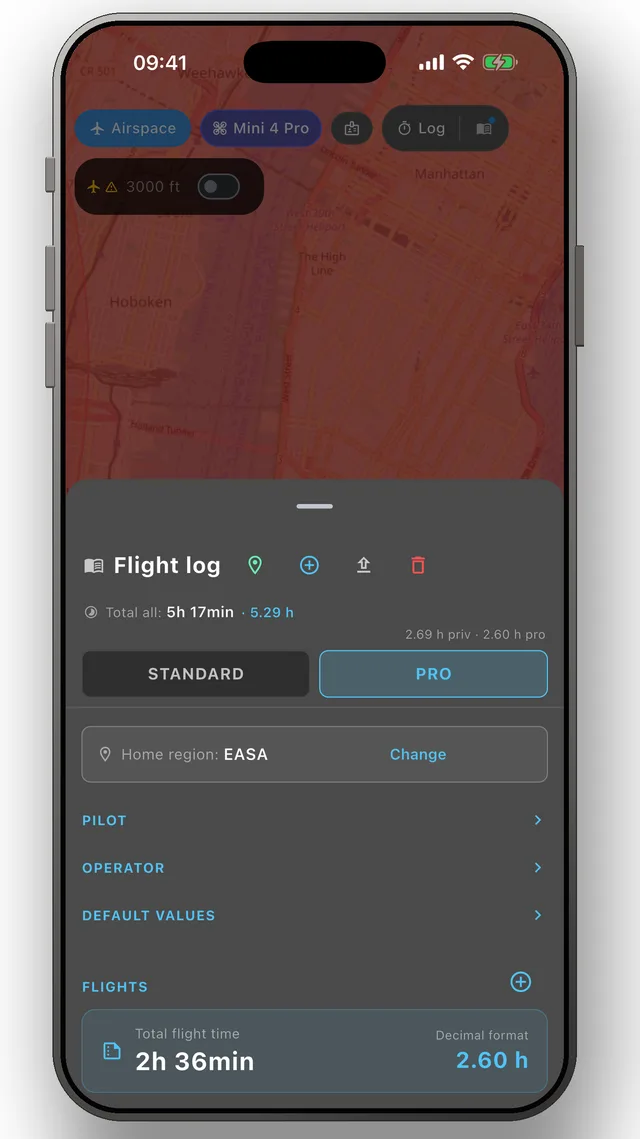
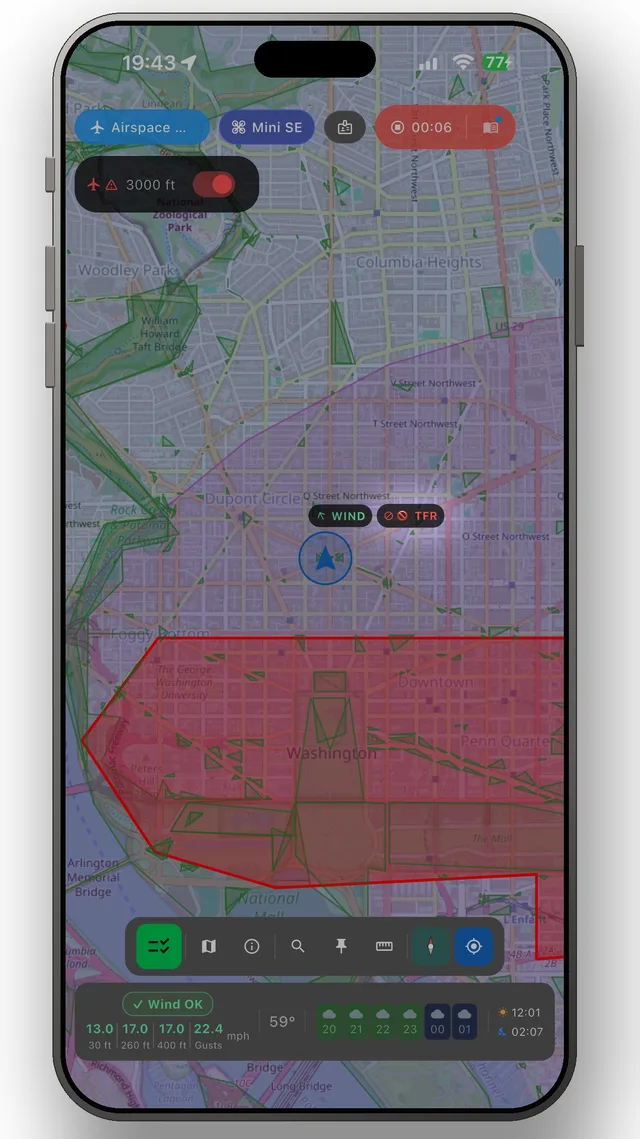
DroneKoll shows no-fly zones, weather and NOTAMs on one interactive map — with a flight log and checklists built in.
More in the app:Interactive zone map · Flight log · Planning & measuring · Pre-flight checklists · Flying abroad