Can you fly your drone in the United States?
Whether you can fly depends on your drone, your registration and exactly where you fly. Here is what applies: key rules, no-fly zones and the official sources, in one place.
Regulator
Federal Aviation Administration (FAA)
Framework
14 CFR Part 107 + 49 USC 44809 (recreational)
Pilot credential
Part 107
Mapped zones
18,466
KEY RULES
- Max 400 ft (122 m) above ground level: 14 CFR 107.51 for Part 107 pilots, 49 USC 44809 for recreational flyers in Class G airspace — in controlled airspace the LAANC grid ceiling is often lower. Part 107 only: you may fly up to 400 ft above a structure while within a 400-foot radius of it; the recreational 400 ft rule has no such exception.
- Register drones 250g+ on FAA DroneZone ($5, valid 3 years)
- Recreational: pass the free TRUST safety test — carry proof while flying
- Commercial: obtain FAA Remote Pilot Certificate (Part 107 exam)
- Remote ID is required for any drone that must be registered with the FAA. A sub-250g drone flown purely for recreation, and not itself registered, is exempt from Remote ID everywhere — not just inside a FRIA. FRIAs (FAA-Recognized Identification Areas) exist for a different case: flying a drone that IS otherwise subject to Remote ID within a limited, specifically designated area. Any drone flown commercially under Part 107 must be registered and meet Remote ID regardless of weight.
- LAANC authorization required to fly in controlled airspace near airports
- Always maintain visual line of sight (VLOS) — no FPV without visual observer
- Do not fly over people or moving vehicles without authorization
- Night flying allowed with anti-collision lights visible for 3 statute miles (Part 107 pilots: 2021 training update required, waiver no longer needed; recreational pilots must follow CBO safety guidelines)
- State and local laws may add restrictions — always check before flying
Frequently asked questions
Do I need a licence or certificate to fly a drone in the United States?
In the United States, recreational flyers must pass the free FAA TRUST test; commercial flights need an FAA Part 107 Remote Pilot Certificate. Any drone over 250 g must be registered with the FAA. Full requirements and official sources below.
Can I fly a drone as a tourist or foreign visitor in the United States?
Yes — tourists may fly recreationally. All recreational flyers, even under 250 g, must pass the free online TRUST test and carry proof; drones 250 g and over must also be registered on FAA DroneZone (5 US dollars, open to foreign nationals) and broadcast Remote ID. Insurance is not federally required. Rules for foreign pilots can change, so always double-check with Federal Aviation Administration (FAA) before you travel, and see the official sources below.
What are the most important drone rules in the United States?
The short version: Max 400 ft (122 m) above ground level: 14 CFR 107.51 for Part 107 pilots, 49 USC 44809 for recreational flyers in Class G airspace — in controlled airspace the LAANC grid ceiling is often lower. Part 107 only: you may fly up to 400 ft above a structure while within a 400-foot radius of it; the recreational 400 ft rule has no such exception. On top of that: Register drones 250g+ on FAA DroneZone ($5, valid 3 years). Also: Recreational: pass the free TRUST safety test — carry proof while flying. These are central aviation rules — location-specific airspace, land, nature, privacy and photography requirements can also apply in the United States, so always check the official sources.
Where am I not allowed to fly a drone in the United States?
The no-go areas are the restricted zones — typically around airports, prisons, military sites and protected nature. In the United States you can see every zone on the interactive map on this page, and in the DroneKoll app wherever you are standing.
Who regulates drone flying in the United States?
Drone flying in the United States is regulated by Federal Aviation Administration (FAA), which handles both the rules and the airspace. Their official pages are linked under Sources below — that is where changes appear first.
Good to know
OFFICIAL SOURCES
- FAA — Drone regulations Official FAA hub for all UAS rules, registration and resources faa.gov
- FAA DroneZone — Registration Register your drone, manage certificates and check compliance faadronezone-access.faa.gov
- B4UFLY — Airspace check Official FAA app for checking airspace restrictions before flight faa.gov
- LAANC — Authorize via Aloft (free) Submit LAANC requests via Aloft, an FAA-approved free provider. The portal auto-detects your location — tap the map to confirm and request authorization. air.aloft.ai
- TRUST — Recreational safety test Free mandatory safety test for all recreational drone pilots faa.gov
ADDITIONAL RESOURCES
- FAA — Remote ID Remote ID requirements — required for every drone that must be registered, regardless of weight faa.gov
- FAA — Part 107 (commercial) Remote Pilot Certificate for commercial drone operations faa.gov
- FAA — Recreational flyers Rules and resources for hobby and recreational drone pilots faa.gov
Always check official FAA sources before flying. This app is a tool — not a legal authority. Rules vary by state and municipality. Verify federal, state and local regulations for your specific location.
The app
The whole picture, up to date — in your pocket
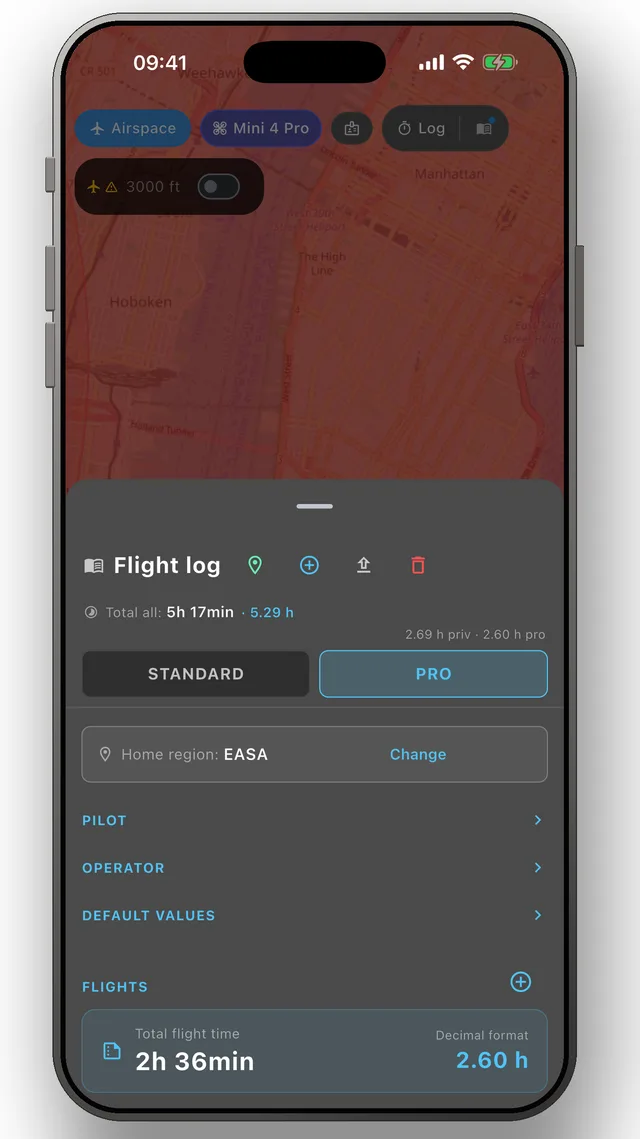
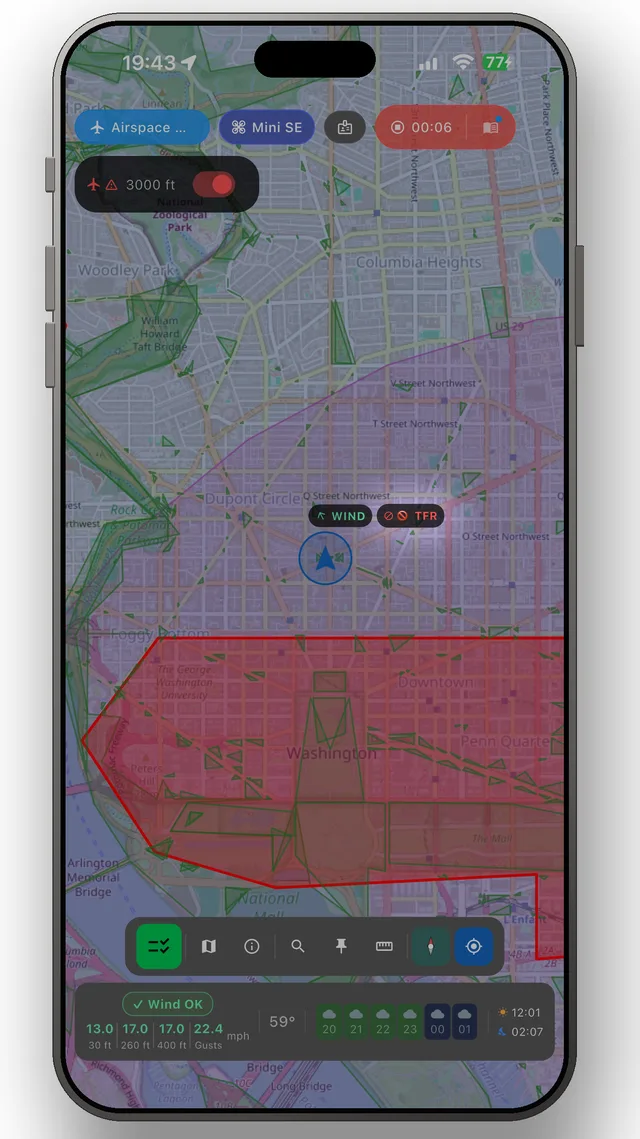
DroneKoll shows no-fly zones, weather and NOTAMs on one interactive map — with flight log and checklists built in.
More in the app: Interactive zone map · Flight log · Planning & measuring · Pre-flight checklists · Flying abroad