Can you fly your drone in Panama?
Whether you can fly depends on your drone, your registration and exactly where you fly. Here is what applies: key rules, no-fly zones and the official sources, in one place.
Regulator
Autoridad Aeronáutica Civil (AAC)
Framework
Norma AAC/DG/DSA/001-2021 (Resolución 004-2021-NRA-DG-AAC, Gaceta Oficial 29276)
Pilot credential
RPA Pilot License
KEY RULES
- Maximum height depends on the RPA class: Micro (≤250 g) → 100 ft (~30 m); Light (251 g–25 kg) → 400 ft (~120 m); Medium (26–150 kg) → 400 ft, but limited to 100 m without a Mode S transponder (AAC standard §9.2, §10.1.1, §11.1.5, §11.1.10).
- Every RPA, including the Micro class (≤250 g), must be registered with the AAC (§8.1, §9.1, §15.2 of the standard) — unlike most countries, Panama does not exempt the lightest drones from registration. Registration is done in person in Albrook; check the current fee.
- Panama does NOT exempt light recreational drones (≤250 g) from registration — unlike in most countries, the AAC standard (§8.1, §9.1) requires registration for all RPA classes, including Micro.
- Every RPA operation in Panama requires an operating authorization from the AAC (§8.2, §8.20): submit Form 005 (Solicitud de Permiso de Actividades Aéreas Especiales) at least 5 business days in advance.
- Minimum distance of 8 km (5 nautical miles) from airports and aerodromes, the Presidency of the Republic, and prisons (§8.10–8.11 of the AAC standard). The standard also prohibits flying in places that compromise State security, such as embassies, public entities, and banks (§8.11), and the AAC maintains restrictions over police stations, hospitals, and the Ministry of Security (AAC statement of 26/9/2025).
- During takeoff and landing, keep at least 30 m horizontally and 10 m vertically from people not involved in the operation (§13.1 of the AAC standard).
- You must keep the drone within your direct visual contact at all times (RACP).
- Night flights are PROHIBITED without a specific AAC exemption.
- Third-party civil liability insurance is MANDATORY for every RPA owner (§8.4 of the AAC standard), regardless of use. Flying over people also requires AAC authorization and the consent of those involved (§8.16).
- Prohibited, restricted, or danger areas (see the AAC AIP) require specific authorization from the AAC and from the authority in charge of the area — both are required (§13.1 d of the AAC standard). In the Canal zone, protected areas, and indigenous territories, consult the responsible authority before applying for the flight permit.
- Anyone operating an RPA — including recreational and Micro class (≤250 g) — must hold an AAC remote pilot license and a Class 3 medical certificate (§8.3, §9.1, §10.1 of the AAC standard). Commercial use additionally requires a commercial operations authorization (§13.3).
No-fly zones and restrictions

Frequently asked questions
Do I need a licence or certificate to fly a drone in Panama?
In Panama, the credential to know about is the RPA Pilot License. Whether you need it depends on your drone's weight and how you fly — Autoridad Aeronáutica Civil (AAC) runs the scheme, and the official sources below spell out exactly when it applies.
Can I fly a drone as a tourist or foreign visitor in Panama?
Yes, with paperwork: every drone, even sub-250 g, must be registered with the AAC (US$20), every pilot needs an AAC licence and each flight needs AAC authorisation (Form 005, at least 5 working days ahead). The foreign-operator permit (max 15 days) is not for recreation. Insurance required; sub-250 g max 30 m. The Canal, parks and comarcas need extra consent. Rules for foreign pilots can change, so always double-check with Autoridad Aeronáutica Civil (AAC) before you travel, and see the official sources below.
What are the most important drone rules in Panama?
The short version: Maximum height depends on the RPA class: Micro (≤250 g) → 100 ft (~30 m); Light (251 g–25 kg) → 400 ft (~120 m); Medium (26–150 kg) → 400 ft, but limited to 100 m without a Mode S transponder (AAC standard §9.2, §10.1.1, §11.1.5, §11.1.10). On top of that: Every RPA, including the Micro class (≤250 g), must be registered with the AAC (§8.1, §9.1, §15.2 of the standard) — unlike most countries, Panama does not exempt the lightest drones from registration. Registration is done in person in Albrook; check the current fee. Also: Panama does NOT exempt light recreational drones (≤250 g) from registration — unlike in most countries, the AAC standard (§8.1, §9.1) requires registration for all RPA classes, including Micro. These are central aviation rules — location-specific airspace, land, nature, privacy and photography requirements can also apply in Panama, so always check the official sources.
Where am I not allowed to fly a drone in Panama?
What you need to avoid are the restricted zones — typically around airports, prisons, military areas and protected nature areas. You'll find the official map for Panama under Sources below, and the DroneKoll app shows current NOTAMs (temporary airspace restrictions) for Panama.
Who regulates drone flying in Panama?
Drone flying in Panama is regulated by Autoridad Aeronáutica Civil (AAC), which handles both the rules and the airspace. Their official pages are linked under Sources below — that is where changes appear first.
Good to know
OFFICIAL SOURCES
- AAC — Civil Aviation Authority of PanamaOfficial website of the Civil Aviation Authority of Panama. Information on drone registration, the RPAS standard, and procedures for domestic and foreign operatorsaeronautica.gob.pa
- Norma AAC/DG/DSA/001-2021 — Remotely piloted aircraft (RPAS)Text of the AAC standard setting out the requirements for operating remotely piloted aircraft systems (RPAS) in Panama (PDF)aeronautica.gob.pa
- AAC Albrook Office (in-person registration required)Building 805, Albrook, ground floor — Documentation Department. Submit a request letter (or send it to correspondencia.aac@aeronautica.gob.pa); the AAC will assign an appointment. Bring the registration form, a copy of your RPA license, ID card, specifications, invoice, insurance policy, and payment receipt. Cost: US$20aeronautica.gob.pa
- AAC — Press Releases and Current RegulationsOfficial AAC announcements regarding regulatory updates, temporary restrictions, and changes to drone proceduresaeronautica.gob.pa
ADDITIONAL RESOURCES
- STRI/Smithsonian — AAC Research GuideDetailed guide from the Smithsonian Tropical Research Institute on the AAC authorization process, including the Letter of Informed Consent for restricted areasstri.si.edu
- MiAmbiente — Protected Areas (National Parks)Panama's Ministry of the Environment. Special permits for drones in protected areas: Soberanía National Park, Barú Volcano, Coiba, Darién, etc.miambiente.gob.pa
- Panama Canal — Official InformationPanama Canal Authority. The locks, dams, and ships in transit are restricted areas (AIP ENR 5): authorization from the AAC and from the authority in charge of the area is requiredpancanal.com
Always check the AAC's official sources before flying. This page is a guide — not a legal authority. Panama applies Norma AAC/DG/DSA/001-2021, with WEIGHT-DEPENDENT maximum altitudes and restricted areas in the Panama Canal zone (AIP ENR 5).
The app
The whole picture, up to date — in your pocket
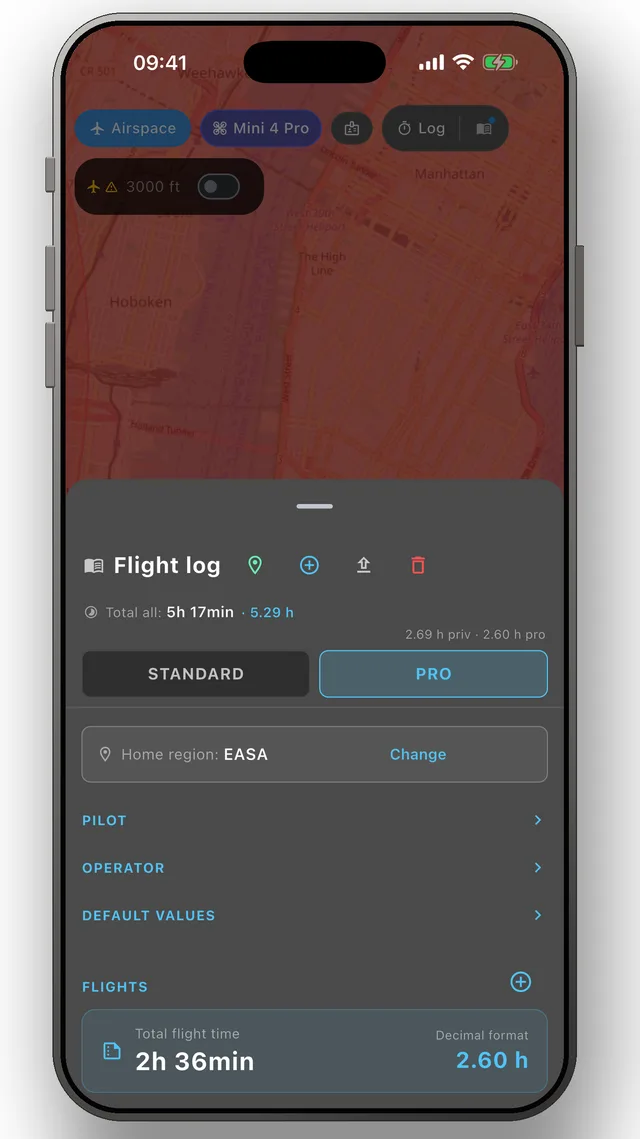
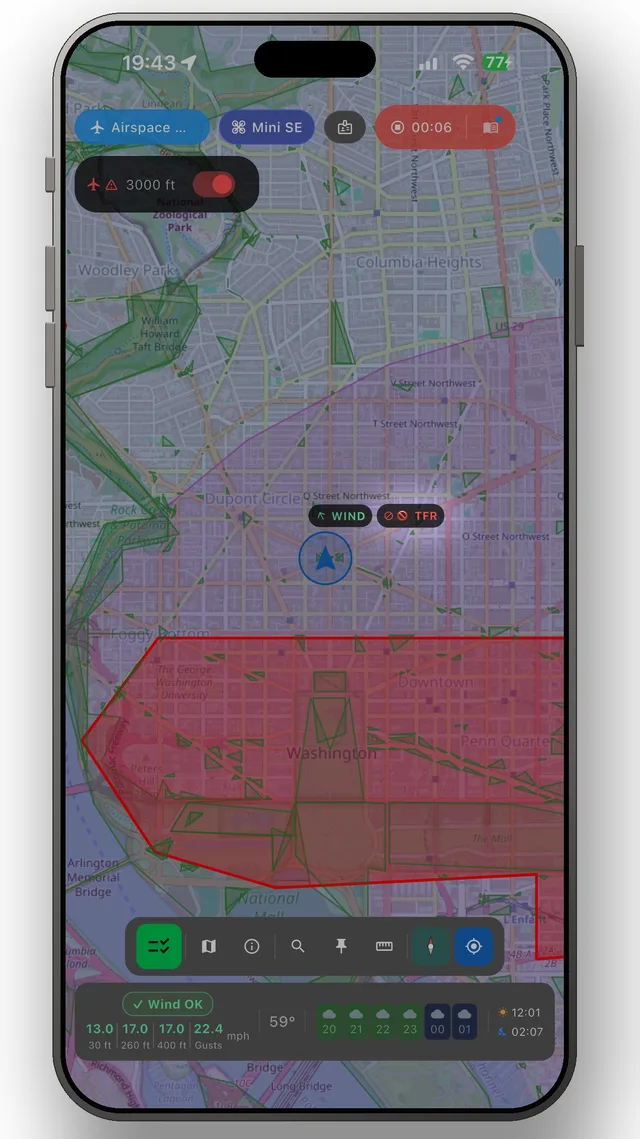
DroneKoll shows weather and current NOTAMs on the map — with a flight log and checklists built in.
More in the app:Interactive zone map · Flight log · Planning & measuring · Pre-flight checklists · Flying abroad